Barramundi
Barramundi is a semi-catadromous predator that moves between freshwater rivers, estuaries and coastal shallows as it matures, so where and when to fish for it shifts with the season and the tide.
160 guides in the directory fish for barramundi, across 26 regions
- Also called
- barra
- Water
- fresh, estuary, salt
creeks, rivers and upper freshwater… - Typical size
- 50-90 cm
3-8 kg - Trophy size
- 1 m +
15-20 kg +
Where guides fish for it
Guides who fish for it
When to fish for it
How it is fished
Poppers and walk-the-dog lures at dawn and dusk
Cast surface poppers and walk-the-dog stickbaits tight to snags, undercut banks and lily edges, working them with sharp rod-tip sweeps or a side-to-side walk so barra explode ('boof') on the lure at the surface.
When: dawn and dusk, into low light and after dark in warmer months
Casting hardbody minnows around structure
Cast 100-125mm suspending or slow-floating minnows and vibration hardbodies tight to submerged timber, rock bars and river junctions, pausing the retrieve for several seconds since bites often come during or just after the pause.
When: year-round, best October to April
Working soft and hard vibes over deep holes
Jig or slow-roll soft plastic paddle tails, jerk shads and blade-style vibes through deep holes and along drop-offs, using long lifts and drops to keep the lure ticking near the bottom.
When: deeper water, particularly dry season and cooler months
Livebait under a paternoster rig
Fish live mullet, herring or prawns on a paternoster (or running) rig with a Kahle-style hook, rod left in a holder so the fish loads up and hooks itself rather than being struck.
When: year-round, especially around baitfish schools at river mouths and drains
Sight-casting flies to mangrove edges
Sight-cast a weighted or lightly-weighted baitfish pattern beyond the fish so it swims 12-18 inches in front, using a slow, short, bumpy strip; barra sitting in 1-1.2 m of water among mangrove roots take confidently and need a short, sharp strip-strike.
When: shallow mangrove and flats water, warmer months
The outfit
What to actually pick up, per method.
| Method | Rod | Reel | Main line | Leader | Terminal |
|---|---|---|---|---|---|
| Baitcast | |||||
| Surface lures | 6ft 6in to 7ft, 20-40 g, medium-heavy | 150-200 size baitcaster, or 2500-4000 size spin | 20-30 lb braid | 40-60 lb fluorocarbon or hard mono | quality split rings and trebles matched to lure weight |
| Shallow-running lures | 6ft to 6ft 6in, 10-17 lb line class, medium-heavy, fast taper | 150-200 size baitcaster | 20-30 lb braid | 40-60 lb fluorocarbon or hard mono | 100-125mm suspending/slow-floating minnows, split rings and trebles sized to the lure |
| Spin | |||||
| Vibes and blades | 7ft to 7ft 6in, 12-20 lb line class, fast, medium-heavy | 2500-4000 size spin | 20-30 lb braid | 40-60 lb fluorocarbon | 4-6in paddle tails/jerk shads on jigheads, or soft/hard vibes, weight matched to depth and current |
| Live bait | 6ft to 7ft, medium action, soft tip | 600-700 size spin | monofilament | not specified in source | Kahle-style hooks, paternoster or running rig |
| Fly | |||||
| Fly | 9wt fly rod (8wt for smaller fish), fast | large-arbor saltwater fly reel with strong drag | floating or intermediate saltwater fly line | 9-12ft leader, 40-50 lb shock leader/tippet | baitfish patterns (e.g. Barra Bunny) on 2/0 hooks, lightly weighted or unweighted |
When they feed, and where
What makes a spot worth stopping at
Features you can pick off the water, and what the fish is doing there.
creek and drain mouths draining mangroves or a floodplain
the run-out tide flushes prawns and baitfish out of the mangroves and down the drain, and barra sit at the mouth or just below the lip to intercept them
position downstream of the drain and cast up into the flow, working the lure or fly back with the current past the drop-off
submerged timber snags and fallen trees on the outside of river bends
fast current on the outside of a bend concentrates bait, and the snag itself gives barra cover to ambush from without expending energy
cast tight against the timber and work the lure parallel to it, keeping it in the strike zone as long as possible rather than through open water
rock bars and current breaks
these create eddies and slack pockets where barra can hold out of the main flow but still ambush bait being swept past
troll or cast along the seam between fast and slack water, letting the lure swing through the break
flooded mangrove edges and back country on the high tide
rising water pushes barra right up into flooded mangroves to hunt bait sheltering among the roots
work shallow-diving or weedless soft plastics tight along the mangrove edge, sight-casting to bow waves where possible
deep river holes and ledges
in cooler water or bright conditions barra retreat to deeper holding water and feed less actively, ambushing bait that drifts over the ledge
use a deep-diving hardbody or sink a vibe/soft plastic to the bottom and work it slowly along the drop-off
What it eats, and what to tie on
Diet
Barramundi are ambush predators that sit tight to structure and let current or low light bring prey to them rather than chasing in open water. Adults take roughly 60% fish and 40% crustaceans, mostly prawns, while juveniles feed more heavily on prawns, shrimp and small crabs before growing increasingly piscivorous.
Prey: mullet, prawns, herring, small crabs, juvenile barramundi/baitfish schools
Bait
- live mullet — hooked through the nose or lightly through the back, fished under a float or free-lined near structure
- live prawns — fished around drains and creek mouths on the run-out when prawns are actively being flushed
- live herring or small baitfish — free-lined or lightly weighted around snags and rock bars
Lures and flies, by type
Length and weight are the point — match them to the cast weight in the outfit table.
| Type | Length | Weight | Depth | Colour | How it is worked |
|---|---|---|---|---|---|
| Surface | |||||
| popper / walk-the-dog stickbait | 60-100 mm | 6-20 g | — | natural bait-pattern in clear water, brighter chartreuse or white in low light or dirty water | best worked at dawn, dusk and after dark; larger poppers can push too loud a splash so many anglers stay near the smaller end of the range |
| Hard bodies | |||||
| shallow-diving minnow | 80-120 mm | 18-25 g | 1-3 m | silver or natural bait-pattern in clear water; gold or chartreuse in dirty water | the standard all-round barra lure for casting to snags, drains and mangrove edges |
| deep-diving minnow | 110-150 mm | 25-40 g | 3-5 m+ | natural in clear water, high-contrast gold/black or fluoro pink in turbid water | used to work river bends, rock bars and deeper holding water, particularly when trolling |
| Soft plastics | |||||
| paddle-tail or jerk shad on a jig head | 100-130 mm (4-5 in) | jig head 7-11 g (1/4-3/8 oz), lighter in shallow water and heavier in current or deeper water | adjustable via jig head weight, from surface to bottom | natural in clear water, bright or dark silhouette colours in dirty water | can be rigged weedless for fishing tight into timber and mangrove roots that hardbodies can't reach |
| Vibes and blades | |||||
| blade/vibe | 75-110 mm | 13-36 g | worked from the bottom up through the strike zone | natural or bait-pattern | the strong vibration is used to trigger inactive or deep-holding fish, particularly in cooler or turbid water |
| Trolled | |||||
| deep-diving trolling minnow | 100-200 mm | 20-40 g | 3-6 m | natural bait-pattern | sized up to 150-200 mm when specifically targeting metre-plus fish; trolled slowly along ledges and bends |
| Flies | |||||
| Pink Thing / Barra Bunny | 2/0-4/0 hooks | unweighted to lightly weighted | — | — | a classic Australian barra pattern, often the first fly tried in stained water |
| Deceiver / baitfish streamer | 2/0-4/0 hooks | unweighted to weighted depending on line and depth | — | — | imitates mullet and herring baitfish; fished on a floating line in the shallows or an intermediate line in deeper water |
| Gurgler | 1/0-3/0 hooks | floating line | — | — | a surface pattern favoured early morning and late afternoon around structure |
| Whistler | 2/0-4/0 hooks | weighted, intermediate to sink-tip line | — | — | a rattling, noisy fly used to draw strikes in low light or dirty water |
Rules and limits
| Zone | Legal length | Bag / possession | Closed season | Source |
|---|---|---|---|---|
| Northern Territory | Not confirmed for this zone — check NT Fisheries (Northern Territory Department of Agriculture and Fisheries) → | absence is not “no limit” | ||
| Queensland — tidal | Min: 58cm Max: 120cm | n/a — Queensland sets possession limits, not daily bag limits / 5 per person, or 10 per boat (with 2 or more people on board) | East coast (waters other than the Gulf of Carpentaria): from 1 November to 31 January. Gulf of Carpentaria: taking from 7 October to 31 January; possession on a boat from 17 October to 31 January. | Queensland Department of Primary Industries (Fisheries) / Queensland Government · read 2026-08-21 Slot limit — fish under 58 cm or over 120 cm must be released. Authority page notes 'Closed seasons apply'; closure dates quoted from Fisheries Declaration 2019 ss 20-21. |
| Queensland — fresh | Min: 58cm Max: 120cm | n/a — Queensland sets possession limits, not daily bag limits / 5 per person, or 10 per boat (with 2 or more people on board) | East coast (waters other than the Gulf of Carpentaria): from 1 November to 31 January. Gulf of Carpentaria: taking from 7 October to 31 January; possession on a boat from 17 October to 31 January. | Queensland Department of Primary Industries (Fisheries) / Queensland Government · read 2026-08-21 Slot limit. In declared exempt waterways one fish may exceed 120 cm, and during the closed season a reduced limit of 1 per person or 2 per boat applies in those exempt waterways. |
| Western Australia — marine, estuarine and freshwater - northern WA | 550 mm (Max. size 800 mm must be landed as whole fish) | 2 / 2 whole barramundi or 4 fillets of barramundi when not at your principal place of residence | — | DPIRD Fisheries (WA Department of Primary Industries and Regional Development) · read 2026-08-21 Slot limit - fish above the 800 mm maximum size may not be retained. Must be carried whole at sea. No closed season is listed in the recreational fishing guide. |
Tidal vs fresh waters: Queensland publishes two separate limit tables — tidal waters and fresh waters — and a species can carry different rules (or appear in only one) depending on which it is taken from; unlisted species fall to a general possession limit of 20 in whichever table applies. · Gulf of Carpentaria vs Queensland east coast: Several species are split into separate east coast and Gulf of Carpentaria entries with different possession limits, sizes and closure dates (Spanish mackerel, black jewfish, barramundi closures). · Northern vs southern Spanish mackerel waters: The Fisheries Declaration 2019 splits the east coast into northern and southern Spanish mackerel waters with entirely different closure regimes — the south has fixed annual February and March closures, the north has moon-phase-based dated closures set year by year out to 2029.
In the kitchen
Pan-fried
Skin crisps beautifully when patted dry and seared skin-side down first
Baked whole
Large bones lift out easily, making a whole roasted fish simple to serve
Smoked
Meaty flesh takes hot-smoking well, popular on platters and in salads
Barbecued
Firm flakes hold together on the grill unlike softer-fleshed fish
Watch


Common questions
What is the best time of year to catch barramundi?
Barramundi fishing is best from the build-up and wet season through the run-off, roughly October to May, when warm water pushes fish into aggressive, territorial feeding. The build-up months (October–December) trigger explosive surface strikes, while the run-off (March–May) sees fish moving out of flooded systems and feeding hard. The dry season (May–August) is slower but still fishable, especially early and late in the day. Seasonal closures apply in some states, so check current dates before you go.
How big do barramundi get?
Barramundi commonly caught by anglers run from 40cm to around 80cm, but the species grows much larger, with the Australian Museum listing a maximum size of around 1.2 metres and 60kg. They are fast growers, especially in warm tropical water, and can put on several kilograms in a single year. Wild fish can live for 20 years or more.
Do I need a licence to fish for barramundi?
It depends on the state or territory. The Northern Territory requires a recreational fishing licence for most barramundi fishing, while Queensland does not require a general recreational licence for tidal (saltwater) fishing, though a Stocked Impoundment Permit is needed for certain freshwater dams. Western Australia and other jurisdictions have their own licensing rules, so check the relevant state fisheries department before you head out.
How do you tell a barramundi apart from a mangrove jack?
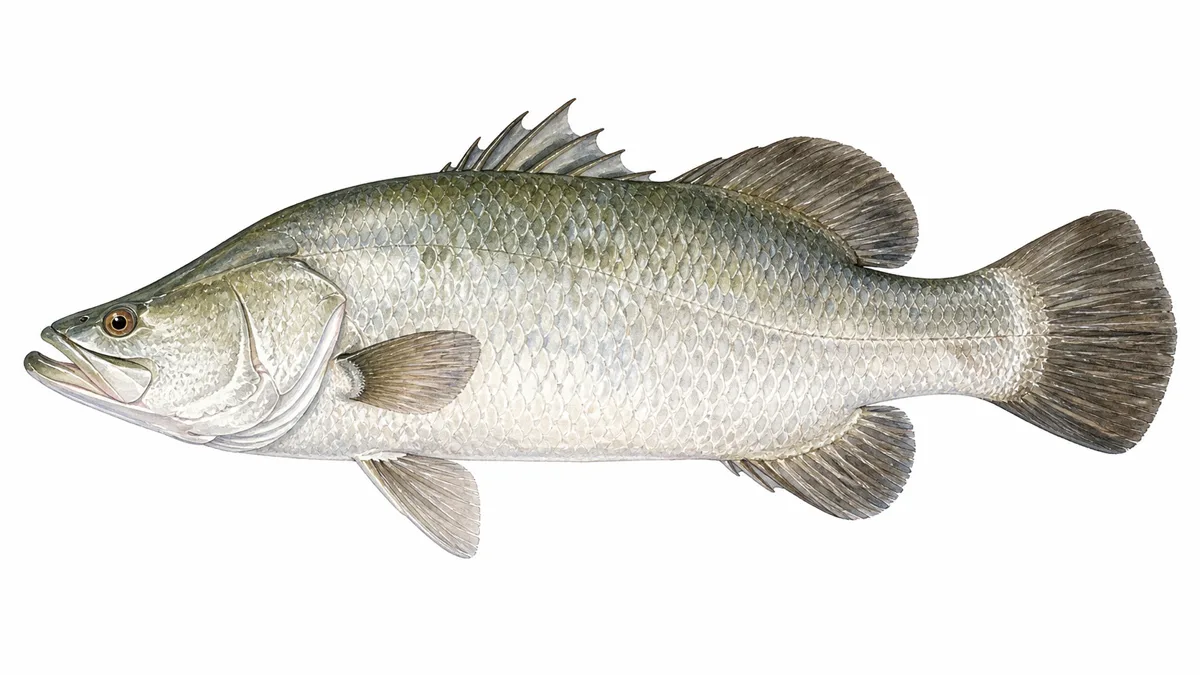
Barramundi have a pointed head with a concave forehead, a large jaw extending behind the eye, and a rounded caudal fin, with adults coloured blue-grey to green above and silvery below. Mangrove jack are a reddish-brown to greenish-brown snapper with a prominent dark spot near the gill cover and a more forked, concave tail. Juvenile barramundi also show a distinct white stripe running from the dorsal fin to the snout, a pattern jacks don't have.
Is barramundi good to eat?
Yes, barramundi is widely regarded as one of Australia's best table fish. It has a mild, slightly sweet and buttery flavour with firm, flaky white flesh that holds together well whether grilled, baked, steamed or pan-fried. It's also a lean, low-mercury source of protein and omega-3s. Any fish you keep must meet the size and bag limits for your state, which differ and change from time to time.
Is barramundi hard to catch?
Barramundi are prized as a challenging sportfish, known for hard, sudden strikes and aerial jumps that throw the hook if the line isn't kept tight. They can be caught by beginners on the right day, especially around the build-up when they feed aggressively near the surface, but consistently finding and hooking them in snaggy mangrove and reef country takes local knowledge. Many anglers improve results fast by fishing with a local guide or charter.
Fishing for barramundi on water you don't know?
A guide who fishes it every week writes you a plan for your water and your dates.