Coral trout
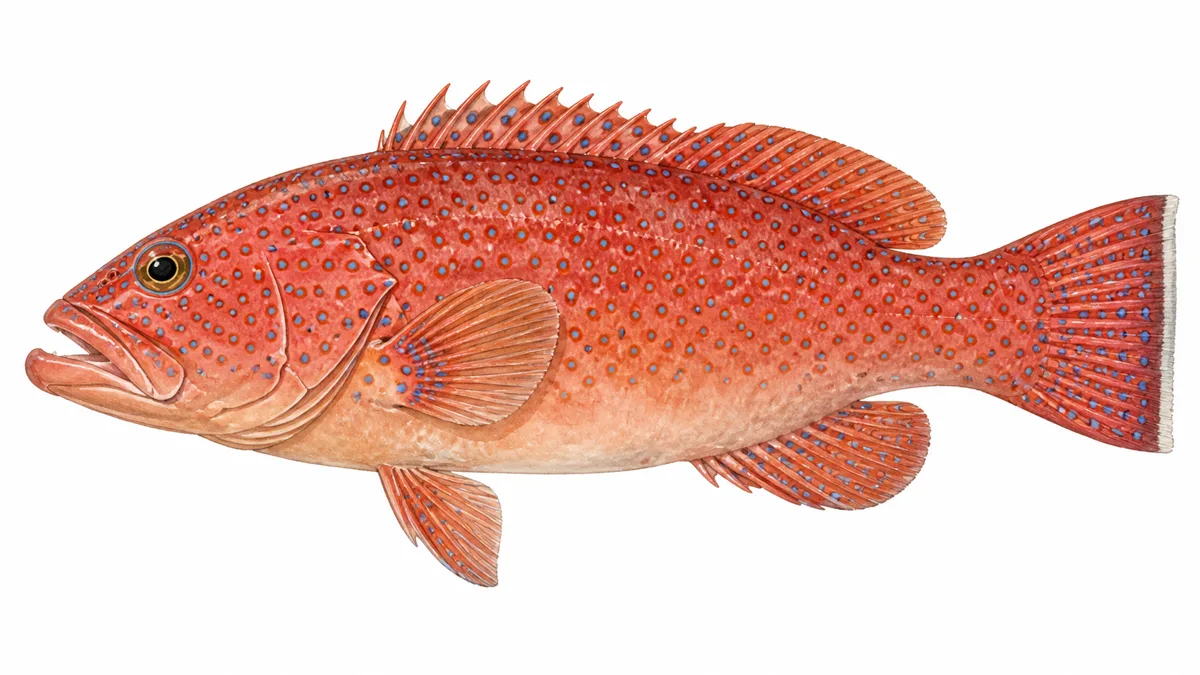
Coral trout is a reef-dwelling grouper, not a true trout, found across tropical northern Australia. It ambushes prey from bommies, coral ledges and drop-offs, so anglers work jigs and baits tight to structure rather than the open water column.
74 guides in the directory fish for coral trout, across 18 regions
- Also called
- Leopard coral trout
Bluespot trout - Water
- salt
tropical coral reefs, bommies, ledges… - Typical size
- 40-60 cm
2-6 kg - Trophy size
- 75 cm +
10 kg +
Where guides fish for it
Guides who fish for it
When to fish for it
How it is fished
Bottom bashing with pilchard and squid strips
Anchor or drift up-current of a reef pressure edge or bommie and drop whole pilchards, tuna strips or squid straight down into the structure on a paternoster or free-running rig, letting the sinker bounce to find fish holding tight to coral.
When: any time, most reliable on the run of current
Vertical jigging deep structure
Drop a metal jig to the bottom on reef walls and drop-offs, work it 10 m up off the bottom with a moderate jigging cadence then let it free-fall, since trout often strike on the drop.
When: deeper water, 50-100 m reef structure
Soft plastics on jig heads
Cast or drop soft plastics rigged on jig heads sized to the depth and current, working sandy reef edges and drop-offs where trout patrol the transition to open bottom; most strikes come on a controlled fall.
When: shallower reef edges, 20-40 m
Casting stickbaits and poppers over the reef flat
Cast sinking stickbaits, poppers or diving minnows in the 100-180 mm range over shallow reef flats and bommies, working structure edges where trout ambush baitfish.
When: shallow reef flats and bommie edges
Trolling diving minnows along the reef edge
Troll sinking stickbaits and diving minnows over the top of the reef or down the drop-off at around 3-4 knots in 1-10 m of water, a secondary method to bait and jig fishing.
When: shallow reef edge, calm conditions
The outfit
What to actually pick up, per method.
| Method | Rod | Reel | Main line | Leader | Terminal |
|---|---|---|---|---|---|
| Spin | |||||
| Jigs | 5ft to 6ft, PE3-5 jigging rod, 40-150 g, medium-heavy to heavy | 6000-8000 size | 50 lb braid (PE3-5) | 80 lb fluorocarbon | metal jigs 40 g in shallow water to 150 g in 70-100 m, solid assist hooks |
| Soft plastics | 7ft, PE4-5, not stated, medium-heavy | 4000 size | 40-60 lb braid | 80 lb fluorocarbon | 3-5 in soft plastics on heavy jig heads sized to hold bottom in the current |
| Shallow-running lures | 6ft to 6ft 6in, not stated, medium-heavy | 4000-6000 size | 50 lb braid | 80-100 lb fluorocarbon | 100-180 mm sinking stickbaits, poppers and diving minnows on solid rings |
| Overhead | |||||
| Bait | 6ft to 6ft 6in, not applicable - bottom rig, heavy | overhead 15-30 lb class, high-capacity | 50 lb braid | 80 lb fluorocarbon | 6/0-8/0 Kahle or circle hooks on a paternoster or free-running rig with a ball sinker |
| Trolling | 6ft, trolling action, not stated, medium-heavy | overhead 15-24 kg class | 50 lb braid or 24-37 kg monofilament | 80-100 lb fluorocarbon | sinking stickbaits and diving minnows trolled at 3-4 knots |
When they feed, and where
What makes a spot worth stopping at
Features you can pick off the water, and what the fish is doing there.
bommies and isolated reef pinnacles
trout hold on the high point or in the lee of the pinnacle to intercept baitfish being pushed over and around it by current
work jigs or plastics vertically down the face, working the up-current side first
reef drop-offs and ledges
the change in depth concentrates baitfish and gives trout a wall to ambush from and dive back into once hooked
cast lures or drift baits along the edge, keeping contact as the bottom falls away
holes and caves in reef or rock
trout use these as ambush cover and a bolt-hole, sitting just inside the entrance
present baits or slow-fall plastics right at the mouth of the hole and be ready for an immediate hard take and dive
the pressure point where current hits structure
this up-current face is where drifting prey first arrives, so trout stack here rather than on the sheltered downstream side
position the boat to deliver baits/lures onto this face on the drift or via a controlled drop
shallow reef flats and rubble gardens
on the push of the tide trout move up onto the flats to hunt crabs and small fish over the shallows
sight-cast or blind-cast poppers, stickbaits or flies across the flat as water floods in
What it eats, and what to tie on
Diet
Coral trout are highly piscivorous ambush predators, taking around one prey item a day from a resting position tight to reef structure rather than actively roaming to hunt. Adults feed almost entirely on small reef fish, especially damselfish (Pomacentridae) and wrasse (Labridae), while juveniles rely more on prawns and other crustaceans.
Prey: damselfish, wrasse, small parrotfish, hardyhead baitfish, prawns, pelagic baitfish (herrings/anchovies)
Bait
- whole pilchard — 3-6 inch bait on a 6/0 or larger hook, fished hard against structure
- tuna strip — tough, stays on the hook through repeated bites and reef contact
- squid — whole or strip, fished on a ball-sinker or paternoster rig in depths over 50m
- live small baitfish — gathered with a sabiki rig and deployed immediately near structure
Lures and flies, by type
Length and weight are the point — match them to the cast weight in the outfit table.
| Type | Length | Weight | Depth | Colour | How it is worked |
|---|---|---|---|---|---|
| Surface | |||||
| popper | 100-180 mm | — | — | — | cast over shallow flats and reef edges for explosive surface strikes |
| Hard bodies | |||||
| stickbait / diving minnow | 100-180 mm | — | shallow to mid | — | cast to structure or trolled at 3-4 knots along reef edges |
| Soft plastics | |||||
| paddle-tail/jerk minnow on a jighead | 100-150 mm | 15-25 g | shallow, calm water | bait-pattern or natural reef colours | worked with a slow lift-and-flutter fall on semi-slack line — most bites come on the drop |
| paddle-tail/jerk minnow on a jighead | 100-150 mm | 30-60 g | deeper water or strong current | bait-pattern or natural reef colours | stepped up to hold the strike zone against current and depth |
| Jigs | |||||
| slow-pitch/mechanical jig | 150-220 mm | 40-150 g | 1-50 m+, scaled to depth and current | — | octopus-skirted slow-pitch styles worked over bommies and deep reef structure |
| Trolled | |||||
| sinking stickbait / diving minnow | 100-180 mm | — | shallow to mid, matched to reef depth | — | trolled at 3-4 knots along drop-offs and reef edges when tide is running hard |
| Flies | |||||
| large weighted baitfish/Clouser-style pattern | 4-6 in | heavily weighted, fast-sinking line | — | — | cast to bommies, ledges and drop-offs on a 9-10wt outfit with a heavy leader; stripped fast and erratic to trigger a strike, and be ready to turn the fish before it dives into cover |
| weighted prawn pattern | 3-4 in | moderately weighted | — | — | best over shallow reef flats on the push of an incoming tide, when trout move up to hunt crabs and prawns |
Rules and limits
| Zone | Legal length | Bag / possession | Closed season | Source |
|---|---|---|---|---|
| Northern Territory | Not confirmed for this zone — check NT Fisheries (Northern Territory Department of Agriculture and Fisheries) → | absence is not “no limit” | ||
| Queensland — tidal | Min: 38cm | n/a — Queensland sets possession limits, not daily bag limits / Combined limit: 7 in total of all trout species | Coral reef fin fish waters: from 8 October 2026 to 12 October 2026 and from 6 November 2026 to 10 November 2026 (2027: 26 October to 30 October and 25 November to 29 November) | Queensland Department of Primary Industries (Fisheries) / Queensland Government · read 2026-08-21 Plectropomus leopardus falls under the 38 cm minimum and the combined 7-fish trout limit. The separately listed blue spotted coral trout (Chinese footballer) carries Min: 50cm Max: 80cm within the same combined limit of 7. Coral trout is a regulated coral reef fin fish, so the two annual 5-day spawning closures apply; also subject to the overall combined possession limit of 20 for all coral reef fin fish. |
| Western Australia — marine - North Coast and Gascoyne Coast bioregions | 450 mm | 1 / General finfish possession limit applies | — | DPIRD Fisheries (WA Department of Primary Industries and Regional Development) · read 2026-08-21 Demersal scalefish; the individual daily bag limit of 1 sits inside the mixed demersal daily bag limit of 4 that applies in the North, Gascoyne and South Coast bioregions from 1 June 2026. |
Tidal vs fresh waters: Queensland publishes two separate limit tables — tidal waters and fresh waters — and a species can carry different rules (or appear in only one) depending on which it is taken from; unlisted species fall to a general possession limit of 20 in whichever table applies. · Gulf of Carpentaria vs Queensland east coast: Several species are split into separate east coast and Gulf of Carpentaria entries with different possession limits, sizes and closure dates (Spanish mackerel, black jewfish, barramundi closures). · Northern vs southern Spanish mackerel waters: The Fisheries Declaration 2019 splits the east coast into northern and southern Spanish mackerel waters with entirely different closure regimes — the south has fixed annual February and March closures, the north has moon-phase-based dated closures set year by year out to 2029.
In the kitchen
Baked whole
coloured skin and firm flakes present well cooked and served whole
Steamed
gentle heat protects the delicate flakes from breaking apart
Pan-fried
quick high heat suits the fine, low-oil flesh well
Poached
moist, mild flesh takes well to citrus and light butter sauces
Watch


Common questions
What is the best time of year to catch coral trout?
Coral trout can be caught year-round on the Great Barrier Reef and northern reefs, but the cooler months from April to October are generally most productive, when fish sit tighter on structure and bite readily through the day. Fishing is closed during the spawning-season coral reef fin fish closures each spring, which vary by state and region. Outside the closure, any time the sun is up tends to produce bites.
What size do coral trout grow to, and is there a minimum size to keep one?
Common coral trout are a mid-sized reef fish, commonly taken in the 40-60cm range with larger specimens well known on deeper offshore reefs. Minimum size and bag limits apply and differ by state, so always check current rules before keeping a fish.
Is coral trout good to eat?
Yes, coral trout is one of the most sought-after eating fish on Australian reefs, prized for its firm, pearly white flesh and mild flavour. It regularly appears on seafood restaurant menus around the country and much of the commercial catch is exported live into Asian markets specifically for the table. Its reputation as top-tier eating is a major reason it's targeted so heavily by both recreational and commercial fishers.
Where do you find coral trout?
Coral trout live on tropical coral reefs and adjacent reef structure across northern Australia, with the Great Barrier Reef off Queensland the best-known fishery, plus reef systems off Western Australia and the Northern Territory. They hold close to bommies, coral heads, drop-offs and reef edges rather than open water, so anglers target structure directly with sounders and drift or anchor fishing. Do not go looking for them in cooler southern or temperate waters, or in New Zealand, as the species doesn't occur there.
Do I need a fishing licence to target coral trout?
It depends on the state, since Australian recreational fishing licensing is set at state level rather than nationally. Some states require a general recreational fishing licence for any saltwater fishing while others don't, and rules on gear, boat limits and closures also differ, so check the relevant state fisheries department before heading out.
How do you tell coral trout apart from other reef trout species?
The common coral trout has a pink-to-red-orange body covered in small electric-blue spots, without the yellow-edged fins seen on the similar coronation trout. Several other coral trout species (bar-cheek, blue-spot, passion-fruit) share the same rough body shape and reef habitat, so spot colour, size and fin-edge colour are the key features to check rather than overall body shape alone.
Fishing for coral trout on water you don't know?
A guide who fishes it every week writes you a plan for your water and your dates.