Giant trevally
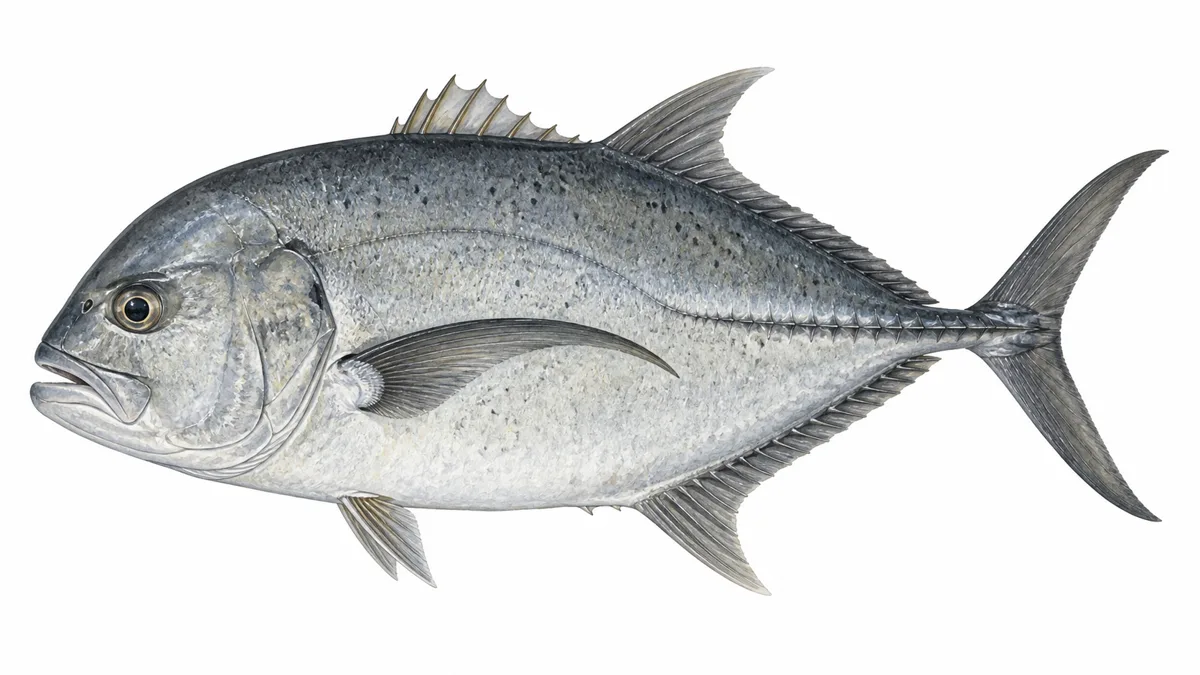
Giant trevally is the largest trevally in Australian waters, a reef predator that hunts shallow coral bommies and drop-offs. It hits surface poppers and stickbaits worked fast over structure, and its power on light tackle is the reason anglers target it.
62 guides in the directory fish for giant trevally, across 16 regions
- Also called
- GT
lowly trevally - Water
- salt
coral reef bommies, reef channels,… - Typical size
- 60-90 cm
5-10 kg - Trophy size
- 1 m +
20 kg +
Where guides fish for it
Guides who fish for it
When to fish for it
How it is fished
Popping into fusilier schools and bommies
A big cup-faced popper is cast tight against reef edges, bommies or bait schools and worked with hard rod sweeps followed by fast wind-up of slack so it dives, spits and chugs; when a GT eats, don't strike, just keep winding until the rod loads against a locked drag.
When: Making tide with current running, especially the bigger tides of the run; dawn and dusk sessions on the outer reef
Stickbaiting when they follow but won't commit
A sinking or floating stickbait worked just under or across the surface with sharp sweeps and pauses, side-to-side like a fleeing baitfish, is the follow-up when a GT tracks a popper without eating it.
When: Same tide windows as popping, used as the second lure once a fish has shown interest
Slow-pitch/speed jigging deep reef edges and drop-offs
Metal jigs are dropped to structure on reef edges, wrecks and drop-offs in 30-80 m and worked with speed-jigging or slow-pitch strokes; on slack or neap tides when the surface bite dies, dropping metal slices or vibes to the bottom and ripping them back to the surface also works.
When: Deeper water and slack/neap tide periods when surface activity shuts down
Live-baiting reef edges with mullet or herring
Live mullet, herring, pilchards or fusiliers are nose- or shoulder-hooked and fished on a simple leader-to-hook rig around drop-offs and current lines where GT hunt, letting the bait swim naturally.
When: Changing tides, especially around high tide, early morning and late afternoon
Fly popper fished to teased-up fish
GTs are teased to the boat with popper lures on spin gear, then a large baitfish-pattern or popper fly is dropped in front of them and stripped hard the moment they commit.
When: Same current and light windows as popping
The outfit
What to actually pick up, per method.
| Method | Rod | Reel | Main line | Leader | Terminal |
|---|---|---|---|---|---|
| Spin | |||||
| Surface lures | 8 ft, 80-180 g, heavy | 14000-20000 size, sealed drag | PE6 braid, roughly 60-80 lb | 100-150 lb fluorocarbon | strong split rings, heavy single or treble hooks |
| Shallow-running lures | 7 ft 6 in, 35-100 g, medium-heavy | 10000 size | PE5 braid, roughly 50-60 lb | 120 lb fluorocarbon | 150-220 mm stickbaits, BKK-grade hooks, quality split rings |
| Jigs | 80 g jig weight, medium-heavy | Inshore-class spin reel, 50 size | 20 lb line | 80 g jigs; heavier-gauge assist hooks (9/0-13/0) on Kevlar cord for full-size fish | |
| Overhead | |||||
| Live bait | 100-200 lb fluorocarbon | 6/0-10/0 hook nose- or shoulder-hooked into live mullet, herring, pilchard or fusilier, quality high breaking strain crane swivel | |||
| Fly | |||||
| Fly | 9 ft, 11-12 weight | large arbor, holding 300 yd of 80 lb braided backing | 11-12 weight fly line | 9 ft, 80-100 lb fluorocarbon | large baitfish patterns and poppers (EP GT Baitfish, Semper Fly, Crease Fly, Deceivers, black Things, Clousers) |
When they feed, and where
What makes a spot worth stopping at
Features you can pick off the water, and what the fish is doing there.
creek mouths and drains draining tidal flats
baitfish and prawns get flushed out of the flats on the run-out and funnel through the narrow outlet, and GT sit in the deeper hole below the lip waiting for it to pass
position up-current of the drain and cast across or up into the flow, working a popper or plastic back down through the outlet with the current
reef edges and coral bommies
isolated bommies and reef edges concentrate baitfish and give GT a fixed ambush point to dart out from
cast poppers or stickbaits tight along the edge of the structure and work them past it rather than over open water
channel mouths and lagoon entrances
the narrowing funnels bait past a predictable point as the tide pushes through
fish the current seam where the channel meets open water, letting the lure swing through the flow rather than retrieving straight back
drop-offs adjacent to shallow reef or flats
when the tide goes slack or runs neap, GT retreat from the shallows to these deeper edges rather than switching off completely
drop a metal jig, vibe or soft plastic to the bottom on the drop-off and work it vertically with rapid lifts rather than fishing the surface
headlands and rock bars
these are pressure points where tidal current is squeezed and accelerated, holding bait against the structure
cast across the current and let the lure swing through the pressure point, working it hardest where the flow is fastest
What it eats, and what to tie on
Diet
Giant trevally are powerful, opportunistic ambush predators that hold at current-swept structure and hit whatever gets swept past, mostly baitfish but readily crustaceans and even other predatory fish. In estuaries and inshore reef systems they show a strong preference for baitfish schools such as fusiliers, with prawns and other crustaceans making up a secondary share of the diet, and larger fish will take mackerel or small tuna.
Prey: baitfish (mullet, herring, fusiliers), prawns, crustaceans, small mackerel/tuna
Bait
- live mullet — nose- or shoulder-hooked and fished on a running rig near structure or a current seam
- live herring, pike or yellowtail — drifted around 1-6 m deep off holding structure
- dead mullet strip or oily fillet (e.g. tuna) — fished with a running ball sinker between swivel and hook, or trolled rigged whole near drop-offs
- live or fresh prawns — effective where crustaceans make up a larger share of the local diet
Lures and flies, by type
Length and weight are the point — match them to the cast weight in the outfit table.
| Type | Length | Weight | Depth | Colour | How it is worked |
|---|---|---|---|---|---|
| Surface | |||||
| popper | 100-180 mm | 45-150 g | — | not specifically sourced | worked with a steady rhythmic sweep to chug and spit water; the mainstay technique when current is pushing bait to the surface |
| stickbait | 100-180 mm | 45-150 g | — | not specifically sourced | sinking or floating stickbait worked with a side-to-side sweep for fish that follow a popper but won't commit; the pause on the sink is often the trigger |
| Hard bodies | |||||
| deep-diving minnow | 150-200 mm | not specifically sourced | 3-4 m minimum | not specifically sourced | trolled or cranked near drop-offs when GT are holding deeper than surface lures reach |
| Soft plastics | |||||
| jerk shad | 65-80 mm | not specifically sourced (weighted jighead) | — | not specifically sourced | dropped to the bottom and worked the same way as a metal or vibe for fish holding deep off structure |
| Jigs | |||||
| offshore speed jig | not specifically sourced | 150-300 g, up to 400 g in deep current | — | not specifically sourced | dropped to reef or drop-off structure and worked with rapid lifts and drops to mimic a fleeing baitfish; scale weight up with depth and current strength |
| Metals | |||||
| casting metal slice | not specifically sourced | 20-40 g | — | not specifically sourced | cast and worked with a slow to moderate retrieve around inshore structure and current edges |
| Flies | |||||
| large baitfish streamer / brush fly (e.g. GT tan or black brush fly) | 6-12 in, hooks 3/0-8/0 | intermediate to fast-sink line | — | — | durable, extra-strong saltwater hooks are essential; smaller 1/0-4/0 patterns can still draw strikes from fish that won't commit to the biggest flies |
Rules and limits
| Zone | Legal length | Bag / possession | Closed season | Source |
|---|---|---|---|---|
| Northern Territory | Not confirmed for this zone — check NT Fisheries (Northern Territory Department of Agriculture and Fisheries) → | absence is not “no limit” | ||
| Queensland — tidal | None | n/a — Queensland sets possession limits, not daily bag limits / Combined limit: 20 in total of all trevally species | Queensland Department of Primary Industries (Fisheries) / Queensland Government · read 2026-08-21 Giant trevally is not listed as a separate row; the authority's tidal table lists a generic 'Trevally' entry with no size limit and a combined 20-fish limit across all trevally species. Related carangids are broken out separately with their own rules (amberjack, samsonfish, swallowtail dart, yellowtail kingfish, giant queenfish). | |
| Western Australia — marine | — | 3 (mixed large pelagic finfish daily bag limit; no separate individual species limit printed) / General finfish possession limit applies, including the additional 10 kg of large pelagic fillets with skin on | — | DPIRD Fisheries (WA Department of Primary Industries and Regional Development) · read 2026-08-21 Listed as 'Trevally, giant' in the large pelagic finfish table with no minimum size printed (shown as N/A). Do not read that as an absence of other rules - the mixed large pelagic limit still binds. |
Tidal vs fresh waters: Queensland publishes two separate limit tables — tidal waters and fresh waters — and a species can carry different rules (or appear in only one) depending on which it is taken from; unlisted species fall to a general possession limit of 20 in whichever table applies. · Gulf of Carpentaria vs Queensland east coast: Several species are split into separate east coast and Gulf of Carpentaria entries with different possession limits, sizes and closure dates (Spanish mackerel, black jewfish, barramundi closures). · Northern vs southern Spanish mackerel waters: The Fisheries Declaration 2019 splits the east coast into northern and southern Spanish mackerel waters with entirely different closure regimes — the south has fixed annual February and March closures, the north has moon-phase-based dated closures set year by year out to 2029.
In the kitchen
Curried
strong spicing suits the coarser flesh of bigger fish
Smoked
smoking masks the stronger, oilier flavour well
Pan-fried
best kept for small fish under a few kilos with milder flesh
Watch


Common questions
What is the best time of year to catch giant trevally in Australia?
The dry season months give the most consistent shots, when calmer weather opens up the reef flats and edges GT hunt along. Some fisheries, such as the Gold Coast, see stronger activity through the warmer months from late spring into early autumn. Conditions matter more than a fixed calendar window, so target settled weather with good water clarity over any specific month.
How big do giant trevally get?
Giant trevally are the largest of the trevally family, with mature fish commonly reaching well over a metre and specimens over 20 kilograms not uncommon on Indo-Pacific reefs. They grow steadily through life, moving from estuaries and shallow lagoons as juveniles into deeper reef and offshore atoll habitat as they mature. A fish over 10 kilograms is considered a solid, hard-fighting adult.
Can you eat giant trevally?
Giant trevally are edible but not highly regarded as table fish, and larger individuals are more likely to carry ciguatoxin, a reef-fish toxin that causes serious illness and isn't destroyed by cooking. Smaller GT are considered better and safer eating than big, old fish taken from known ciguatera-risk reefs. Many anglers release GT specifically because of this risk. If you're unsure of a local reef's ciguatera history, ask a local tackle shop or check state fisheries advice before keeping one.
Do I need a licence to fish for giant trevally?
Yes, a recreational fishing licence or permit is required in most Australian states and in some cases an additional boat-based licence applies. Requirements and any bag or size limits differ by state, so check your state fisheries department before you go. New Zealand's Ministry for Primary Industries sets separate rules for northern waters where GT occasionally turn up.
How do you tell a giant trevally apart from other trevally species?
Giant trevally have a steep, almost vertical head profile, a heavily built body and strong bony scutes along the straight rear section of the lateral line, plus a distinctive black blotch at the base of the pectoral fin. Bludger trevally, by contrast, have a more humped head, dark grey-green backs with black fins and scutes, and lack the pectoral-fin blotch. Colour on GT is highly variable, from silvery grey to almost jet-black in mature males, so body shape and the pectoral spot are more reliable identifiers than colour alone.
Fishing for giant trevally on water you don't know?
A guide who fishes it every week writes you a plan for your water and your dates.