Mulloway
Mulloway is a large sciaenid found from river mouths and surf beaches to offshore reefs. Runs push into estuaries after rain floods baitfish downstream, and fish gather in deep holes, rock bars and channels, mostly biting at night or on the turn of tide.
71 guides in the directory fish for mulloway, across 21 regions
- Also called
- jewfish
jew, silver ghost - Water
- estuary, marine
surf beaches, rocky headlands and… - Typical size
- 50-90 cm
3-10 kg - Trophy size
- 1 m +
20 kg +
Where guides fish for it
Guides who fish for it
When to fish for it
How it is fished
Soft plastics worked slow along the bottom
Paddle-tail and jerk-shad soft plastics (roughly 80-180 mm) are cast to a snag, wall, drop-off or current edge, allowed to sink to the bottom, then worked back with a lift-and-drop or slow roll, kept in constant contact with or close to the bottom.
When: dawn and dusk tide changes, especially a run-in tide
Vertical vibing over sounder marks
A soft vibe is dropped to fish marked on the sounder in deep estuary holes and worked with a slow lift and let it sink back, continuing up and down the water column to hold the fish's interest.
When: slack tide (an hour either side of the turn), moonrise/moonset, and low tide when baitfish push into deeper water
Live and fresh bait fished in the gutter or wash
Whole or filleted mullet, tailor, squid and herring are fished on a circle-hook paternoster or running rig from the beach, or a live mullet is balloon-rigged and drifted through a rock wash with minimal added weight so it swims naturally.
When: moon weeks (4 nights either side of new/full moon), run-in tide, dusk through full dark
Fly fishing bridges, wharves and headlands
Flies are cast to mulloway feeding on mullet around bridges, wharves and rocky headlands; a floating line suits fish working on the surface, while a fast-sink line gets a fly down to fish holding deeper in daylight.
When: night, especially under bridge or wharf lighting; daylight can also produce fish
The outfit
What to actually pick up, per method.
| Method | Rod | Reel | Main line | Leader | Terminal |
|---|---|---|---|---|---|
| Spin | |||||
| soft plastic | 9 ft minimum, 10-20 kg rated for rock/beach work, 7-28 g jigheads (1/4-1 oz), medium-heavy to heavy | 5000-8000 size spin | 30-50 lb braid | 40-60 lb fluorocarbon | TT HeadlockZ HD-style jigheads, 5/0-8/0 hooks, 1/4-1 oz, paired with 4-7 in (100-180 mm) paddle-tail/jerk-shad soft plastics |
| Vibes and blades | 7 ft, approx. 20 g (100 mm soft vibe), medium-heavy | 3000 size | 20 lb braid | 20-30 lb fluorocarbon | 100 mm/20 g soft vibe in natural colours |
| Bait | 12-14 ft surf, or 9-11 ft heavy rock rod, 57-170 g sinkers (2-3 oz snapper leads sheltered, 4-6 oz star sinkers in surf), 8-15 kg rated | 6000-14000 size spin, or overhead (e.g. Avet SX) | 30-50 lb braid | 50-80 lb mono shock leader (2 m) to an 80-100 lb mono trace (1 m) | 8/0-10/0 ringed circle hooks for whole baits, 6/0 paternoster gangs for cut baits, star sinkers or snapper leads, or a balloon rig 1-3 m above a live mullet |
| Fly | |||||
| Fly | 8-weight for smaller fish, 10-weight with a strong drag reel preferred for larger mulloway | large-arbor saltwater fly reel with a reliable drag | floating line for surface-feeding fish; S6 fast-sink line for deeper daylight presentations | 10-15 kg fluorocarbon tippet (raspy teeth cut lighter tippet) | Clousers, shrimp patterns, and dark-coloured mullet-imitation flies such as Sparklebaits and bombers |
When they feed, and where
What makes a spot worth stopping at
Features you can pick off the water, and what the fish is doing there.
deep estuary holes below bridges and at river junctions
fish hold here year-round because bait gets flushed through and concentrated on the run-out tide
anchor or drift upstream of the hole and work baits or soft plastics/vibes down through it on the run-out, working the whole water column back toward the lip
ocean beach gutters running parallel to sand banks
the deeper, darker water gives cover close to the baitfish schools pushed along the beach
fish the front edge of the run-in tide with large baits or big soft plastics cast along the length of the gutter
wave-break gutters formed behind a bommie or rock ledge, with constant whitewash coverage
the whitewash gives mulloway cover to sit and ambush baitfish pushed through by the swell
pick a mark taking the largest, most direct swell in otherwise calm conditions so the wash stays constant, and hop a soft plastic on the lightest jighead that will still reach bottom
tidal eddies and current seams visible on the surface near reef, wrecks or fallen timber
the eddy marks where current collides with structure, disorienting baitfish into an ambush point
cast across the seam and hop the lure or drift a bait through the disturbed water, keeping contact with the bottom
rock walls, bridge pylons and jetties lit at night
artificial light concentrates baitfish against the structure, and mulloway sit in the shadow line to ambush them
cast flies or soft plastics along the light/shadow edge and work them back with a slow, twitching retrieve
cockle/shellfish beds and seagrass flats adjoining deep water
these flats support the prawn and mantis shrimp populations mulloway feed on as the apex predator of that food web
fish the edge where the flat drops into deeper channel, especially as the tide pulls bait off the flat
What it eats, and what to tie on
Diet
Mulloway are ambush predators that hunt by sight and lateral line rather than active pursuit, keying on schools of baitfish pushed through deep holes, channels and gutters by tidal flow. They take a wide range of prey scaled to their own size, from mysid shrimp and prawns as juveniles up to full-sized fish once they mature past half a metre.
Prey: mullet, prawns, crabs, squid, tailor, herring, slimy mackerel, whiting, bream
Bait
- live mullet — sea or poddy mullet pinned through the nose or lip, fished under a balloon or running sinker rig near structure
- live yellowtail or slimy mackerel — a hardier livebait for longer soaks around deep holes and bridges
- live squid — worked slow near bottom structure, especially where squid are naturally present
- fresh tailor, mullet or salmon fillets — cut/strip baits fished on ledger or paternoster rigs when livebait isn't available; freshness matters more than bait size
- beach worms — used on surf gutters and beach marks depending on the region
Lures and flies, by type
Length and weight are the point — match them to the cast weight in the outfit table.
| Type | Length | Weight | Depth | Colour | How it is worked |
|---|---|---|---|---|---|
| Hard bodies | |||||
| suspending minnow | 100-150 mm | — | 0.5-2 m depending on model | bait-pattern or natural mullet colours | worked with a twitch-pause cadence along structure and current lines |
| Soft plastics | |||||
| paddle-tail / jerk shad | 100-180 mm | 7-30 g jighead | worked to the bottom in the depth being fished | pearl, white, gold or natural mullet patterns; darker/UV colours favoured at night or in dirty water | fished on a slow lift-and-drop or hop-along-bottom retrieve; jighead weight scales with depth and current |
| large paddle/swimmer shad | 180-230 mm (7-9 in) | 1/2-1 oz (14-28 g) jighead | — | natural baitfish tones | for the biggest fish over deep holes and rock ledges |
| Vibes and blades | |||||
| soft vibe | 80-100 mm | 30 g | to the bottom, effective past 12 m | white or glow, especially in low light | cast and fan out to cover open water in deep holes and channels |
| Jigs | |||||
| micro jig / slow-pitch jig | — | 40-60 g | to the bottom in strong current | white or glow | used to get down quickly in strong mid-tide current over deep structure |
| Flies | |||||
| large mullet-style streamer (Sparklebait / bomber style) | large, mullet-profile | floating line when fish are feeding on surface mullet; S6 fast-sink line by day when fish sit deeper | — | — | fished dark-coloured around lit bridge pylons and wharves at night, where the silhouette and a little flash mimic a mullet |
| Clouser-style baitfish fly | medium-large | matched to floating or sinking line per depth | — | — | a general baitfish/shrimp imitation worked slow near structure; use a 10-15 kg fluorocarbon tippet as mulloway have raspy teeth |
Rules and limits
| Zone | Legal length | Bag / possession | Closed season | Source |
|---|---|---|---|---|
| New South Wales — saltwater | 70 cm | 1 / 1 | none listed | NSW DPIRD Fisheries (Department of Primary Industries and Regional Development) · read 2026-08-21 Boat limit of 2 per boat per day (where 2 or more fishers are on board); charter boat limit of 3 per boat per day. The Fisheries Management order wording is 'a person must not take a Mulloway unless the Mulloway has an overall length of 70 cm or greater'. Mulloway is not on DPIRD's list of species whose possession limit is twice the daily bag limit, so possession equals the bag limit. |
| Queensland — tidal | Min: 75cm | n/a — Queensland sets possession limits, not daily bag limits / Limit: 2 | Queensland Department of Primary Industries (Fisheries) / Queensland Government · read 2026-08-21 Authority note: 'Must be kept whole while on a boat'. Listed as 'Mulloway', distinct from the separately listed black jewfish and scaly jewfish rows. | |
| South Australia — marine and estuarine, outside the Lakes and Coorong recreational fishing area | 82 cm minimum | 2 / not confirmed | none listed | PIRSA (Primary Industries and Regions South Australia) — Fisheries and Aquaculture · read 2026-08-21 Daily boat limit 6 where 3 or more people are fishing on board. Different limits apply inside the Coorong (see the separate Coorong row and the zone exception). |
| South Australia — within the Coorong (Lakes and Coorong recreational fishing area) | 46 cm minimum | 10 for fish 46-82 cm; 2 for fish over 82 cm / not confirmed | none listed | PIRSA (Primary Industries and Regions South Australia) — Fisheries and Aquaculture · read 2026-08-21 Tiered bag limit inside the Coorong; boat limits reported as 30 for the 46-82 cm tier and 6 for the over-82 cm tier. The 46 cm Coorong minimum is confirmed on PIRSA's Mulloway profile; the tier boat limits are less firmly confirmed — treat them as indicative and re-check the profile page. |
| Victoria — marine and estuarine | 60 cm minimum legal size | 5 / not specified by the authority (daily bag limit applies) | none stated | Victorian Fisheries Authority (VFA) · read 2026-08-21 Listed by VFA as Argyrosomus japonicus; no water-specific variation shown on the species page. |
| Western Australia — marine and estuarine | 500 mm | 2 / General finfish possession limit applies (10 kg of fillets of any species plus 10 kg of large pelagic fillets with skin on, or 10 kg of fillets plus one day's bag limit of whole fish, or two days' bag limit of whole fish) | — | DPIRD Fisheries (WA Department of Primary Industries and Regional Development) · read 2026-08-21 Nearshore/estuarine finfish category, which carries a mixed-species daily bag limit of 16. The guide notes mulloway are caught primarily south of Exmouth Gulf. No closed season is listed. |
Blowering Dam and Copeton Dam: Exempt from the annual Murray Cod closure — Murray Cod may be taken all year in these two dams, while all other waters are closed 1 September to 30 November. · Trout spawning streams — Thredbo River and Eucumbene River (and tributaries): From 1 May to the end of the King's Birthday long weekend these waters run under separate spawning-stream rules: 50 cm minimum size, daily bag limit 1, possession limit 2, artificial fly or lure only (no handlines, no dough-based baits). · Artificial fly and lure only waters (incl. blue ribbon streams, catch-and-release streams, trophy trout dams, trout spawning streams): Notified trout waters split into two classes; in artificial fly and lure only waters the trout daily bag limit is 2 and possession limit 4 (instead of 5 and 10), and bait is prohibited. The Eucumbene and Thredbo Rivers sit in this class from the Saturday of the October long weekend to 30 April inclusive.
In the kitchen
Grilled
large firm flakes hold together well on the grill
Pan-fried
coat first, the mild moist flesh takes crumbing well
Baked whole
small mulloway are excellent gutted and baked whole
Curried
wet cooking suits big, drier specimens best
Watch


Common questions
What is the best time of year to catch mulloway?
Autumn through winter, roughly April to August, is the most reliable stretch, when schools push into river mouths and lower estuaries to feed on migrating mullet. In NSW, late August through October is also a strong shoulder season. Dusk and after dark are the best times of day, especially around a peak tide and a bright moon phase.
How big do mulloway grow?
Most fish landed off beaches, rock ledges and river mouths run three to fifteen kilograms, with schoolies around four kilograms being the most common catch. Mulloway can grow much larger, and specimens over 30 kilograms have been recorded in Australian waters, though a fish that size is a rare, once-in-a-career catch.
Where do you catch mulloway?
Mulloway hold around river mouths, ocean rock ledges, deep beach gutters and estuary drop-offs, particularly where there's a bait school of mullet or whitebait to work. They tend to sit hard against structure such as rock walls, bridge pylons or channel edges rather than open water, and fishing after dark near these spots is far more productive than a daytime session.
Is mulloway good to eat?
Yes, mulloway is regarded as one of Australia's better table fish. The flesh is firm, white and large-flaked with a mild, slightly sweet flavour, holds together well whether grilled, pan-fried, baked or curried, and it freezes better than most species. Legal size limits apply and differ by state, so check local rules before keeping a fish.
How do you tell a mulloway from a black jewfish?
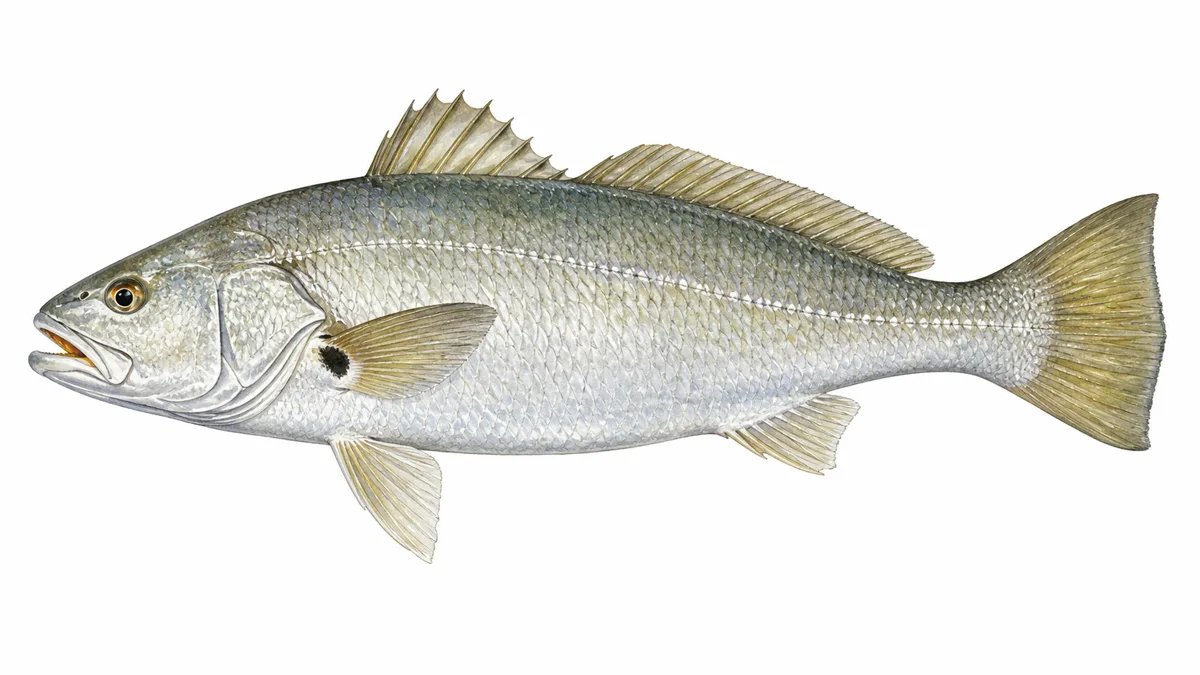
Look at the tail: a mulloway's tail edge is almost straight-cut, while a black jewfish's flares out into a diamond shape with a narrower wrist. Colour is another clue, mulloway are typically bronze-green to silver with a row of pearly spots along the lateral line, whereas black jewfish run darker grey. The two species overlap around the Queensland coast and carry different possession rules, so it pays to know which one is in the esky.
Do you need a fishing licence to target mulloway?
It depends on the state. NSW and Victoria require a recreational fishing licence or fee for saltwater fishing, while South Australia, Queensland, Tasmania and the Northern Territory currently don't require a general licence, and Western Australia only requires one for boat-based fishing, not land-based. Limits and permit requirements also apply and differ by state, so check the local fisheries department before you head out.
Fishing for mulloway on water you don't know?
A guide who fishes it every week writes you a plan for your water and your dates.