Snapper
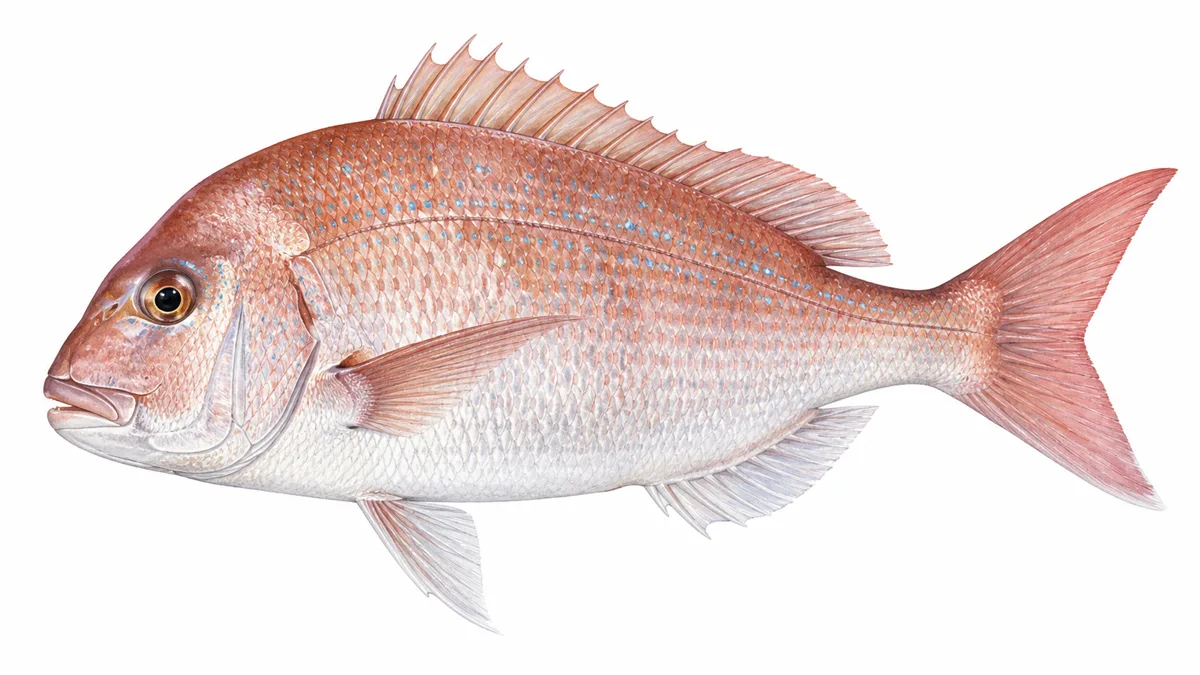
A silvery pink-to-brown sparid with faint blue spots that fades to a pale-nosed adult with a bony head hump. It moves between shallow bays as juveniles and deep offshore reef as adults, so location and season, not just tide, decide whether you're fishing among pinkies or big humpy reds.
242 guides in the directory fish for snapper, across 44 regions
- Also called
- Pink Snapper
Squire, Reddie / Red Bream - Water
- saltwater
estuaries and bays as juveniles,… - Typical size
- 30-60 cm
0.5-3 kg - Trophy size
- 1 m +
18-20 kg +
Where guides fish for it
Guides who fish for it
When to fish for it
How it is fished
Bait and berley over structure
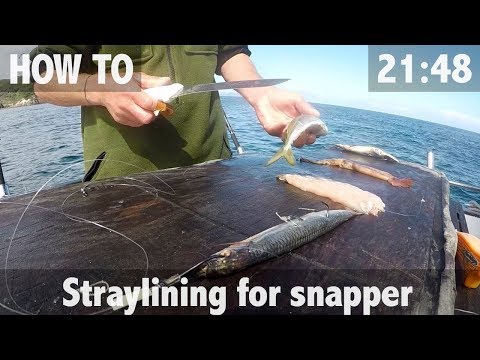
A running ledger (dropper loop) rig with one or two hooks is dropped to the bottom over reef, foul ground or a berley trail, using cut pilchard, mullet, squid or fresh fish strips; a weighted berley cage is worked close to the bottom to hold fish under the boat.
When: year-round, best on the turn of the tide
Soft-plastics over reef and sand
A soft-plastic paddle-tail or jerk shad on a jig head is cast and allowed to sink to the bottom, then hopped back with a slow lift-and-drop retrieve; lighter heads are favoured whenever current allows, with weight added only to hold bottom over reef or in a run-out tide.
When: year-round, especially over shallow reef and workups
Slow-jigging with kabura
A kabura (slider) jig — a round lead head with a skirted, multi-strand octopus-style body concealing small assist hooks — is dropped to the bottom and worked with a slow, steady lift-and-drop; the strike is not set, the fish hooks itself on the light assist rig.
When: year-round in deeper water and over structure
Vibe and blade fishing
A soft or metal vibe is cast out, allowed to sink to the bottom on a semi-slack line, then worked back with a slow lift-drop-pause retrieve that lets the lure fall and flutter on the pause, which is when most bites come; tied direct to the leader with no swivel to preserve the vibration.
When: year-round, effective as soon as snapper move onto a bay or reef
Sight-fishing the flats on fly
Snapper are stalked on foot or from a shallow skiff over harbour sandflats and up mangrove creeks on a rising tide, with a weighted baitfish, crab or shrimp fly cast ahead of a cruising fish and stripped to draw a reaction take; the splash of the fly landing often triggers an immediate follow.
When: warmer months, on the push of the tide over shallow flats
The outfit
What to actually pick up, per method.
| Method | Rod | Reel | Main line | Leader | Terminal |
|---|---|---|---|---|---|
| Spin | |||||
| Bait | 7ft to 8ft, 40-80 g / 6-8 kg sinker, medium-heavy | 4000-6000 size, 4.9:1 to 5.3:1 | 15-24 lb braid | 50-60 lb (23-27 kg) fluorocarbon or mono trace | ledger/dropper-loop rig, two 5/0-7/0 circle or J hooks, dropper loops ~30 cm apart, 6-8 oz sinker in deeper water |
| Soft plastics | 6ft 6in to 7ft, 7-30 g, medium, fast taper | 2500-4000 size, 5.5:1 or faster | 10-20 lb braid | 20-30 lb fluorocarbon, 1-2 m | 1/4-1 oz (7-28 g) jig heads, 3/0-5/0 hooks, 5-7in paddle-tail or jerk shad |
| Jigs | 6ft to 7ft, 20-120 g, slow taper, soft tip | 2500-4000 size or small overhead | 20-30 lb braid | 15-20 lb fluorocarbon, 3 m | kabura/slider jig heads 20-120 g depending on depth and current, small assist hooks on skirt |
| Vibes and blades | 6ft 6in to 7ft, 15-40 g, medium-heavy, fast taper | 3000-4000 size | 10-15 kg (20-30 lb) braid | 10-15 kg (20-30 lb) fluorocarbon | 40-100 g soft or metal vibe/blade lures, tied direct to the lure's split ring, no swivel |
| Fly | |||||
| Fly | 9ft, 7-8wt, n/a (7-8wt fly line), medium-fast | saltwater disc-drag fly reel matched to 7-8wt, floating line (intermediate if over 2 m deep) | 7-8wt floating or intermediate fly line | 12-16 lb fluorocarbon, untapered, 2-3 m | weighted baitfish, crab or shrimp patterns (e.g. Clouser, rabbit/marabou), size 2-2/0 |
When they feed, and where
What makes a spot worth stopping at
Features you can pick off the water, and what the fish is doing there.
rocky reef edges and foul ground meeting open sand or mud
the reef holds the crabs, kina and small fish snapper feed on, while the adjacent soft bottom lets them root out worms and shellfish — the boundary itself concentrates feeding fish
anchor or drift just off the reef edge and work baits or soft plastics along the sand-reef interface rather than up on the structure itself
drop-offs and channel edges in harbours and estuaries
the turning tide funnels baitfish and crustaceans along these edges, and snapper sit on the deeper side waiting for food to be swept past
fish the turn of the tide, casting up-current and letting bait or lure drift and sink down the face of the drop-off
shallow water under 5 m on a making tide
snapper push up onto shallow flats and banks to feed as the tide floods, especially around dusk when low light lets them hunt without being exposed
target these shallows in the last two hours before high tide, particularly if high water coincides with sunset
surf beaches such as Ninety Mile Beach and Taranaki's black-sand coast
gutters and holes in the sand hold crabs, shellfish and washed-up bait that snapper cruise for as the surf works the bottom
cast bait or lures into the deeper gutters between sandbars, working them just after dark or around a moving tide
mussel farm structure and adjacent soft-sediment
the biofouling on farm lines and the sediment build-up beneath them create a rich feeding ground of shellfish and invertebrates
work soft plastics or baits along the sediment edges bordering the farm lines rather than directly under the ropes
What it eats, and what to tie on
Diet
Snapper are opportunistic, generalist bottom feeders that adapt their diet to whatever is locally abundant, taking crustaceans, worms, shellfish and small fish over reef, sand and mud habitat; feeding either stops or is greatly reduced during full darkness.
Prey: crabs, shrimps and prawns, worms, shellfish and tuatua, kina, squid and octopus, small baitfish such as mullet, mackerel and pilchards
Bait
- fresh pilchard or mackerel — oily and effective when fish are actively feeding
- frozen squid or octopus — tough enough to resist small picker fish, good for shore fishing
- live mackerel or small kahawai — hooked through the back and fished near the bottom for trophy-sized fish
- tuatua, crabs or piper (garfish) — natural forage baits that work well where bait-stealing fish aren't a problem
Lures and flies, by type
Length and weight are the point — match them to the cast weight in the outfit table.
| Type | Length | Weight | Depth | Colour | How it is worked |
|---|---|---|---|---|---|
| Soft plastics | |||||
| paddle-tail or jerk-shad minnow | 50-100 mm | 3.5-14 g jig-head (1/8-3/8 oz) | bottom to mid-water depending on jig-head weight | natural bait tones in clear water, brighter or darker silhouettes in dirty water | 3 in tails suit 1/8-3/16 oz heads with 1/0-2/0 hooks; 5 in tails suit 3/8 oz heads with 2/0-3/0 hooks; drift rather than anchor for best coverage |
| large paddle-tail or jigging grub for trophy fish | 100 mm | 14-21 g jig-head | bottom-bounced | natural or bright chartreuse patterns | bounced slowly along the bottom specifically for larger, older snapper |
| Vibes and blades | |||||
| metal blade/vibe | 50-80 mm | 15-40 g | bottom | silver or natural bait colours | cuts through current, gets down fast and telegraphs bottom contact in deeper water |
| Jigs | |||||
| slow-pitch/mechanical jig | 80-150 mm | 20-100 g | full water column to bottom | silver, pink or glow patterns | matched to depth — 20-30 g for shallower grounds up to 100 g for deep offshore snapper grounds (15-100 m); slow, mechanical jigging is the most consistent technique |
| Flies | |||||
| Clouser-style baitfish streamer, green over white | 5-7.5 cm (roughly size 2/0-4/0 hook) | intermediate to sink-tip line | — | — | fished sub-surface over flats and sand edges; increasing fly size tends to select for bigger fish |
| rabbit-strip or marabou slow-sinking baitfish fly | 7-10 cm | intermediate line, #7-9 weight rod | — | — | a slower-sinking, softer-bodied alternative to Clousers for wary fish in skinny water |
Rules and limits
| Zone | Legal length | Bag / possession | Closed season | Source |
|---|---|---|---|---|
| New South Wales — saltwater | 30 cm | 10 / 10 | none listed | NSW DPIRD Fisheries (Department of Primary Industries and Regional Development) · read 2026-08-21 Snapper is not on DPIRD's twice-the-bag possession list, so the possession limit equals the daily bag limit. |
| New Zealand — marine | Not confirmed for this zone — check Fisheries New Zealand (Ministry for Primary Industries) → | absence is not “no limit” | ||
| New Zealand — sports fish | Not confirmed for this zone — check Fish & Game New Zealand → | absence is not “no limit” | ||
| New Zealand — Taupō District | Not confirmed for this zone — check Department of Conservation (Taupō Fishing District) → | absence is not “no limit” | ||
| Queensland — tidal | Min: 35cm | n/a — Queensland sets possession limits, not daily bag limits / 4 per person with no more than 1 fish over 70cm, or 8 per boat (with 2 or more people on board) with no more than 2 fish over 70cm | from 15 July to 15 August | Queensland Department of Primary Industries (Fisheries) / Queensland Government · read 2026-08-21 Chrysophrys auratus. Authority page notes 'Closed season applies'; the closure is set in the Fisheries Declaration 2019 s 35 for snapper and pearl perch waters and covers pearl perch over the same dates. The over-70 cm sub-limit is a cap on large fish, not a maximum size. |
| South Australia — marine — South East Fishing Zone only | 38 cm minimum | not confirmed / not confirmed | West Coast, Spencer Gulf, and Gulf St Vincent and Kangaroo Island Fishing Zones closed until 30 June 2027 | PIRSA (Primary Industries and Regions South Australia) — Fisheries and Aquaculture · read 2026-08-21 Bag limit deliberately left unconfirmed: PIRSA's Snapper species profile states a daily bag limit of 2 per person and 6 per boat where 3 or more people are fishing, while PIRSA's 'Fishing limit updates for 2025-26' news notice states the South East Fishing Zone recreational bag limit increased to 3 per person and 9 per boat from 1 July. It could not be established which figure is current as at August 2026, so no number is published here. Catch and release is prohibited in the closed zones. All Snapper caught must be reported via the free SA Fishing app or the Fishwatch 24-hour hotline (1800 065 522) — from a boat before the fish are landed, and when shore-based before leaving the fishing location. |
| Victoria — marine and estuarine | 28 cm minimum legal size | 10, of which no more than 3 may equal or exceed 40 cm / not specified by the authority (daily bag limit applies) | none stated | Victorian Fisheries Authority (VFA) · read 2026-08-21 Chrysophrys auratus. Must be landed whole so they can be measured by officers if required; cannot be filleted in or on Victorian waters - kept whole or in carcass form until away from the water (filleting permitted at boat ramp cleaning tables). Undersize fish must be released immediately. |
| Western Australia — marine | 500 mm between Lancelin and Black Point; 410 mm between Lancelin and Zuytdorp Cliffs; 450 mm outside the West Coast bioregion | 2 / General finfish possession limit applies; 5 kg of fillets or one day's bag limit of whole fish at the Abrolhos Islands and in Freycinet Estuary | Cockburn Sound and Warnbro Sound closed 1 August to 31 January (inclusive); Shark Bay north of Bernier Island closed 1 June - 31 August (inclusive); Shark Bay Eastern Gulf closed 1 May - 31 July (inclusive); Freycinet Estuary closed 15 August - 30 September (inclusive) | DPIRD Fisheries (WA Department of Primary Industries and Regional Development) · read 2026-08-21 Pink snapper, Chrysophrys auratus. Demersal scalefish - boat-based demersal fishing in the West Coast bioregion is closed until Spring 2027, so the West Coast size limits currently bind land-based fishing (mixed demersal bag limit 2). Outside the West Coast bioregion the mixed demersal bag limit is 4. Individual daily bag limit of 2 applies in all bioregions except in the Abrolhos Islands Fish Habitat Protection Area. |
Blowering Dam and Copeton Dam: Exempt from the annual Murray Cod closure — Murray Cod may be taken all year in these two dams, while all other waters are closed 1 September to 30 November. · Trout spawning streams — Thredbo River and Eucumbene River (and tributaries): From 1 May to the end of the King's Birthday long weekend these waters run under separate spawning-stream rules: 50 cm minimum size, daily bag limit 1, possession limit 2, artificial fly or lure only (no handlines, no dough-based baits). · Artificial fly and lure only waters (incl. blue ribbon streams, catch-and-release streams, trophy trout dams, trout spawning streams): Notified trout waters split into two classes; in artificial fly and lure only waters the trout daily bag limit is 2 and possession limit 4 (instead of 5 and 10), and bait is prohibited. The Eucumbene and Thredbo Rivers sit in this class from the Saturday of the October long weekend to 30 April inclusive.
In the kitchen
Pan-fried
score and dry the skin well for a crisp result
Baked whole
firm flakey flesh holds up to oven roasting on the bone
Raw
sashimi-grade when bled and chilled quickly after catch
Steamed
gentle heat suits the delicate, low-oil flesh
Watch


Common questions
What is the best time of year to catch snapper?
Spring and early summer are the peak season, when large schools of adult snapper move inshore to feed heavily before and after spawning. Winter can still produce good fish, particularly trophy-sized snapper holding on shallow reefs. Snapper can be caught year-round across most of their range, but activity and numbers lift noticeably as water warms.
How do you tell a snapper from a squire?
Squire is simply the name for a young, pan-sized snapper, not a different fish. Juveniles are covered in bright silvery-blue spots along their flanks, which fade as the fish matures. Adults develop the coppery-pink back, silver-white belly and, on older fish, a pronounced sloping forehead not seen on smaller squire.
Where do snapper live?
Snapper favour rocky reefs, sand and mud bottoms, harbours and estuaries, and are most commonly caught in depths from about 1 to 60 metres, though they range down to around 200 metres. Schools shift with the season, moving into shallower bays and inshore grounds to breed before retreating to deeper offshore reef systems.
Is snapper good to eat?
Yes, snapper is regarded as one of the premier table fish across Australia and New Zealand, prized for its firm, sweet, white flaky flesh. It's popular baked whole, grilled as fillets, pan-seared, or served raw as sashimi. As with any fish taken for the table, follow local seafood consumption advice where it applies, particularly in urbanised harbours.
Do you need a licence to fish for snapper?
In most Australian states you need a recreational fishing licence to fish saltwater, while New Zealand has no general recreational sea fishing licence but does apply rules through the Quota Management System. Requirements and fees differ by state and region, so check the rules for wherever you're fishing before you go.
Is snapper hard to catch?
Small squire are relatively easy and a good target for beginners, but hooking a genuine trophy-sized snapper is considered a real test of skill. Big fish fight hard, often hug structure, and reward anglers who master techniques like drifting, jigging and berley work. Bag and size limits apply to snapper and differ by state, so check the current rules before keeping fish.
Fishing for snapper on water you don't know?
A guide who fishes it every week writes you a plan for your water and your dates.